When I first heard that Perplexity Pro was becoming free for Airtel users in India, I thought it was just another promotional offer. Telecom companies do partnerships all the time, so I did not pay extra attention to it. But then something strange happened. Google began offering free Gemini Advanced access through Jio. At first it was only for students, then it expanded to all Jio users. Soon after that, OpenAI unlocked free ChatGPT Go access in India.
Three big AI companies making similar moves in the same country within months did not feel like a coincidence. It felt like a pattern. It felt like I was watching a new strategy form right in front of me.
So I started digging into why all of this was happening. I wanted to understand what pushed these companies to give away premium AI features for free in a country where subscriptions usually do not sell in large numbers. After weeks of reading and thinking, I realized the real answer was connected to something that most people do not talk about.
That answer was the cost of inference and the long term value of real world usage.
What started as a simple question turned into one of the most interesting lessons I learned about the business side of AI. In this article, I want to share the full story of what I discovered.
Understanding Why Inference Cost Matters So Much
Most people hear about AI training. They imagine giant computers running for weeks, burning energy, and costing millions of dollars. That part is expensive, but it happens only once in a while. The real ongoing cost is something different. It is the part where the model reads your message and produces an answer. It happens every single time a person interacts with the AI.
This is called inference.
To keep it simple, I made a small diagram for myself.
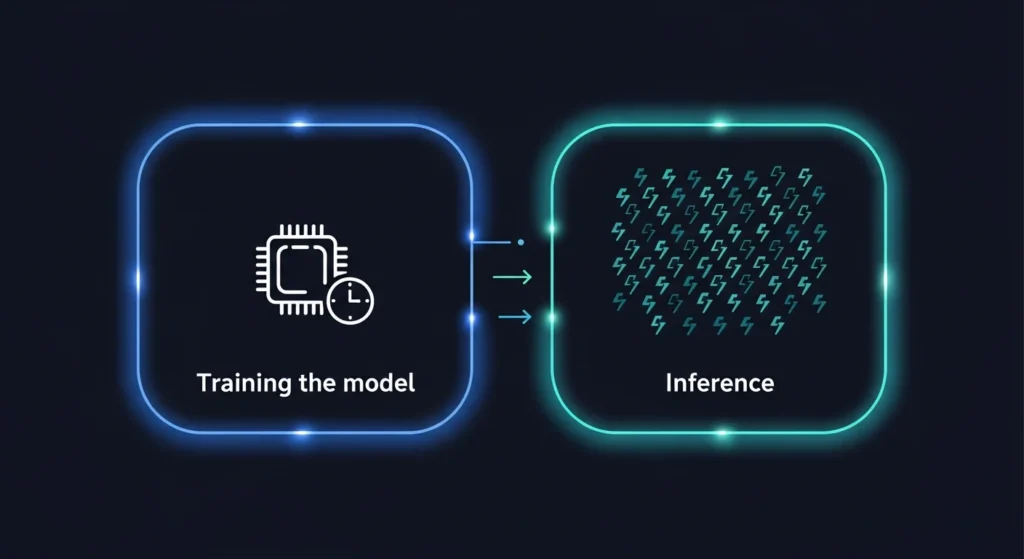
Inference requires powerful chips, electricity, cooling, internet bandwidth and constant uptime. Every response costs something. When you have millions of users, the cost becomes huge.
At first I thought AI companies would try to reduce free usage to save money. Instead, they started offering more access for free. This confused me. Why would they increase their own cost on purpose?
The more I explored the topic, the clearer it became.
AI companies were not trying to reduce usage.
They were trying to increase it.
They were not chasing subscription money.
They were chasing real world data and human behavior patterns.
Why India Became The Center Of This Strategy
When I saw Perplexity, Google and OpenAI all make similar moves in India, I started asking myself what makes India so important for them. The answers showed up quickly.
India has a very large internet population
Millions of users spend time online every day and ask questions about everything.
People use English mixed with many local languages
This gives AI models more variety in how people speak and write.
Most people are mobile first
This helps AI companies understand mobile behavior better.
The market does not buy expensive subscriptions easily
Free access brings millions of people in, which is what these companies want.
To make sense of this, I wrote another simple diagram.
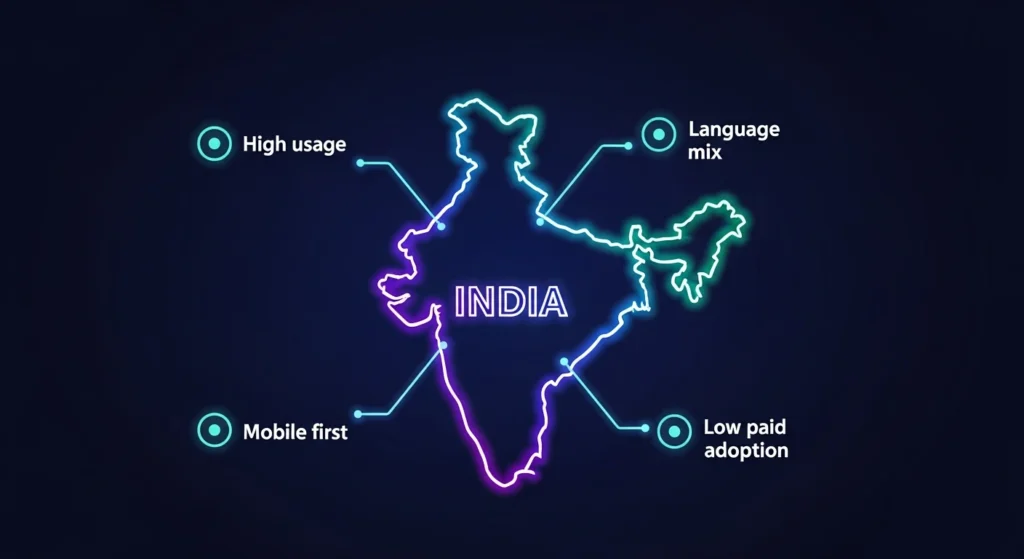
When you put these together, the strategy becomes obvious.
The Real Goal: Large Scale Real World Usage
AI does not become smarter just by training in a lab. It becomes smarter when real people use it every day. When people ask questions, make mistakes, write in different ways, mix languages and try different tasks, the AI learns patterns that cannot be produced artificially.
Here is the loop that every AI company is trying to create.
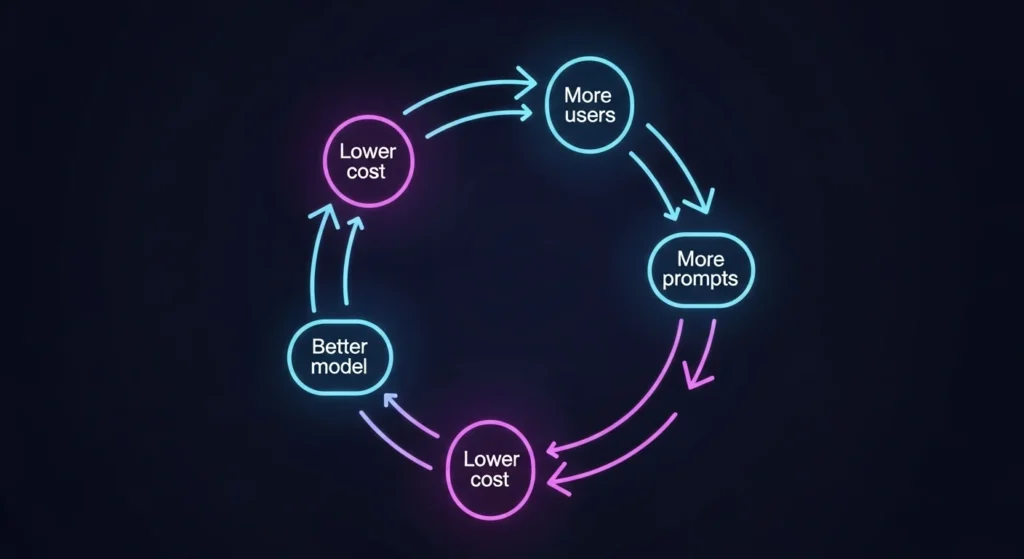
This loop creates a long term advantage.
The company that gets the most real usage today will likely have the strongest AI model tomorrow.
This explains why free premium plans make sense, even though they increase inference cost in the short term. The long term benefits are much bigger.
Perplexity Was the First To Make the Move
When Airtel announced that its users would get free Perplexity Pro for a full year, it surprised the entire tech community. This was the first big AI company to offer premium features completely free at such a huge scale.
Perplexity is not just a chatbot. It is a search engine built on top of AI. For a search engine, user behavior is everything. They need to see how people search, what people click, what answers feel helpful and what questions come up again and again.
Airtel gave Perplexity access to more than 360 million potential users. That is a massive boost for a company that wants to understand search behavior.
I broke it down like this.
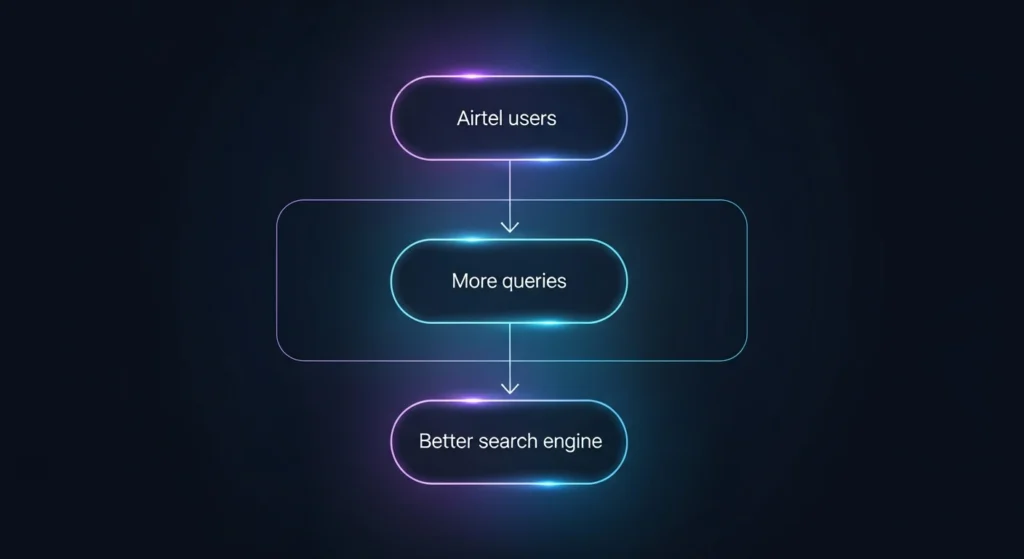
This move put pressure on other AI companies. It made it clear that India could become a major test ground for AI usage.
Google Gemini Followed Through Jio
Not long after Perplexity’s partnership, Google stepped in with Gemini. At first Gemini Advanced access through Jio was only for students. This made a lot of sense, because students generate huge amounts of natural questions and daily tasks. Soon after, Jio expanded this access to all its users. And that is when I realized that Google was taking this very seriously.
I think Google had three big reasons to move fast.
1. India is a major Android market
Most people use Android phones. Gemini is deeply linked with the Android system. This gives Google a rare chance to test voice, camera, search and reasoning tasks directly on mobile phones.
2. Google has a strong hardware advantage
Google uses its own TPU chips. These chips make the cost of running Gemini lower than the cost for companies that rely only on Nvidia GPUs. With cheaper inference, Google can afford to give more free access.
3. Gemini needs real world multimodal inputs
Gemini is powerful in voice and image tasks. To improve these abilities, it needs real world examples. India gives Google massive amounts of voice queries, photo based questions and reasoning prompts.
I created a small diagram to show this.

This is why Google moved right after Perplexity. They saw that India could help Gemini improve faster.
OpenAI Joined Next With ChatGPT Go
A little later, OpenAI opened free ChatGPT Go access for users in India. This was the final confirmation that the shift was real. OpenAI did not want to fall behind in a country that could generate billions of prompts every month.
OpenAI is working toward AI agents that can understand tasks, plan steps and help people complete work. To build something like that, they need a lot of natural human behavior data.
Indian users help them understand:
how people search
how people write
how people explain problems
how people learn
how people use AI for everyday tasks
OpenAI also released a new inference engine. They needed a large user base to test it. India became the perfect environment for this test.
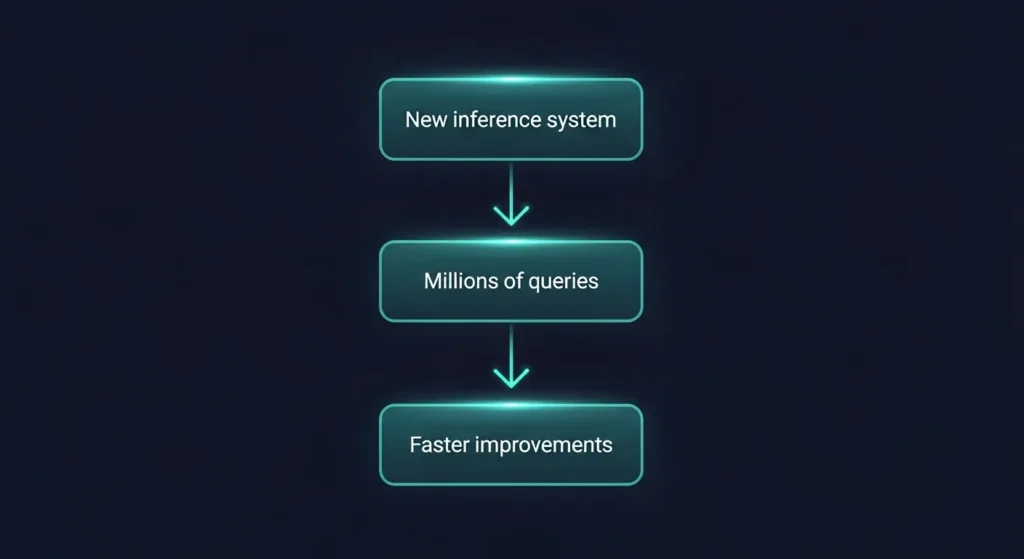
This move completed the pattern among the three companies.
Want To Understand Inference Cost Better?
f you want a simple explanation of how inference cost works and why AI companies focus so much on reducing it, you can read my article here:
AI Inference Cost Optimization 2025
It breaks the entire concept down is easy language.
Why Free Access Actually Improves AI Models Faster
The interesting thing I learned is that free users help AI improve faster than paid users. Paid users often follow patterns because they use AI for professional tasks. Free users include everyone.
Students
Teachers
Office workers
Parents
Teenagers
Hobbyists
Multilingual users
Mobile only users
Their questions are natural, unfiltered, mixed, imperfect and full of real world context. This is exactly the type of data AI needs to get better.
Here is the learning loop again.

The more this loop repeats, the smarter the model becomes.
India's Role in Shaping Global AI Models
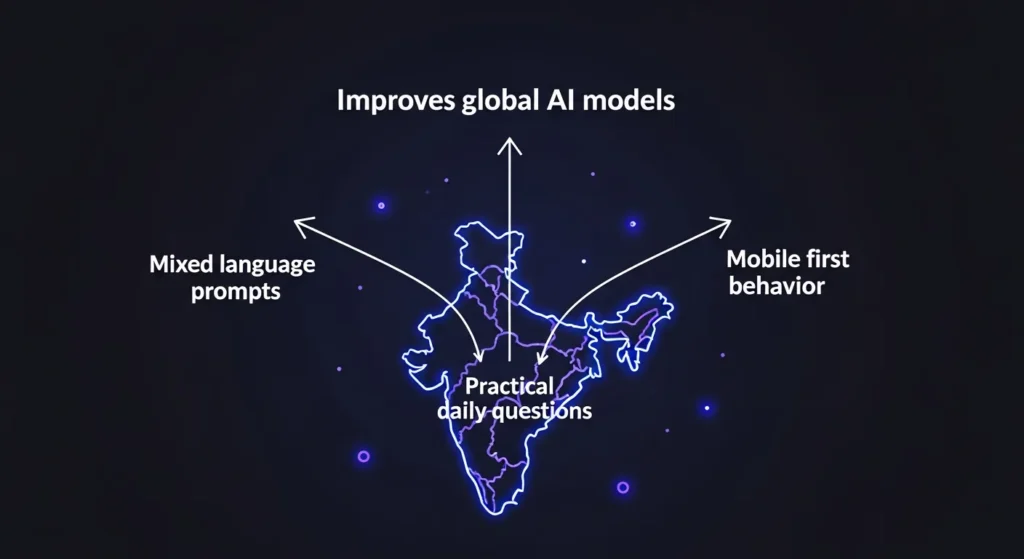
Many people think India’s data helps only with India specific tasks. But the reality is different. India’s variety improves global AI models.
1. Mixed language prompts improve language flexibility
The model learns to handle complex language structures.
2. Practical day-to-day questions improve reasoning
People ask everyday questions that train the model to think simply and clearly.
3. Mobile first queries shape the future of AI agents
AI agents will live inside phones. India helps train them.
This means India is not just part of the audience. India is helping build the intelligence inside these models.
Privacy And What Users Should Know
Even though companies say they anonymize data, users should understand that free AI access always has a bigger purpose behind it. India has lighter data laws compared to some other regions. That makes it easier for companies to gather usage signals.
Users should enjoy the free access but also be aware of the value their usage brings to AI development.
How This Strategy Will Shape the Future
After thinking through the entire chain of events, I believe this is the beginning of a major shift.
AI companies are moving from subscription focus to usage focus
Revenue will grow later. Right now companies want adoption.
Models will improve faster
Millions of new prompts create faster improvement loops.
Emerging markets will shape global AI
India will help define how AI thinks.
New competitors may follow this pattern
Other AI companies might start giving premium access in large markets.
AI agents will be the next step
These early signals are preparing companies for agent based systems.
My Final Thoughts On This Whole Journey
When I first saw free premium AI access in India, it looked like a simple discount. But after watching Perplexity move first, then Google, then OpenAI, I realized this was not a marketing plan. This was a strategy. A long term play built on inference cost, user behavior and global competition.
Perplexity started the wave.
Google strengthened it.
OpenAI completed it.
India became the best place to test and grow AI systems because it has the two things AI companies want the most.
The future of AI will not be shaped only in research labs. It will be shaped in the hands of millions of users. And right now, India is at the center of that story.